What each photo and video shows
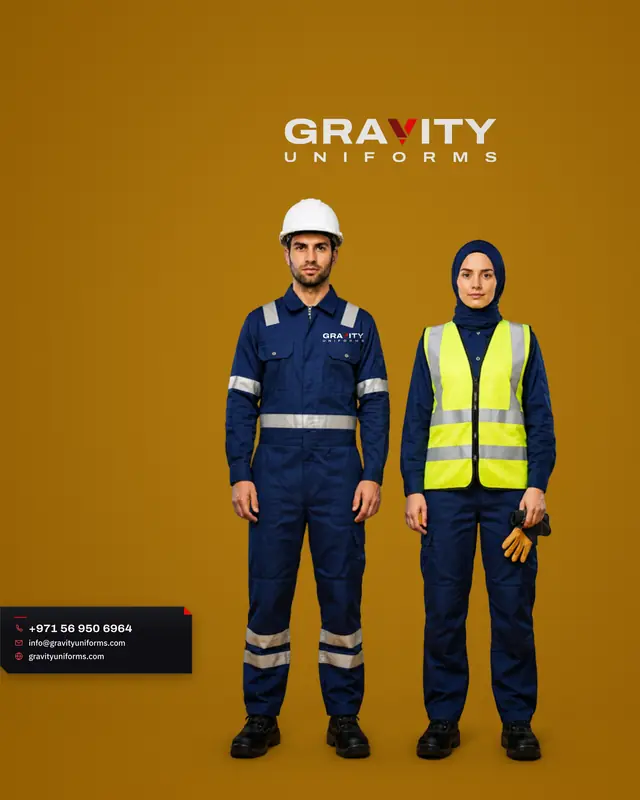
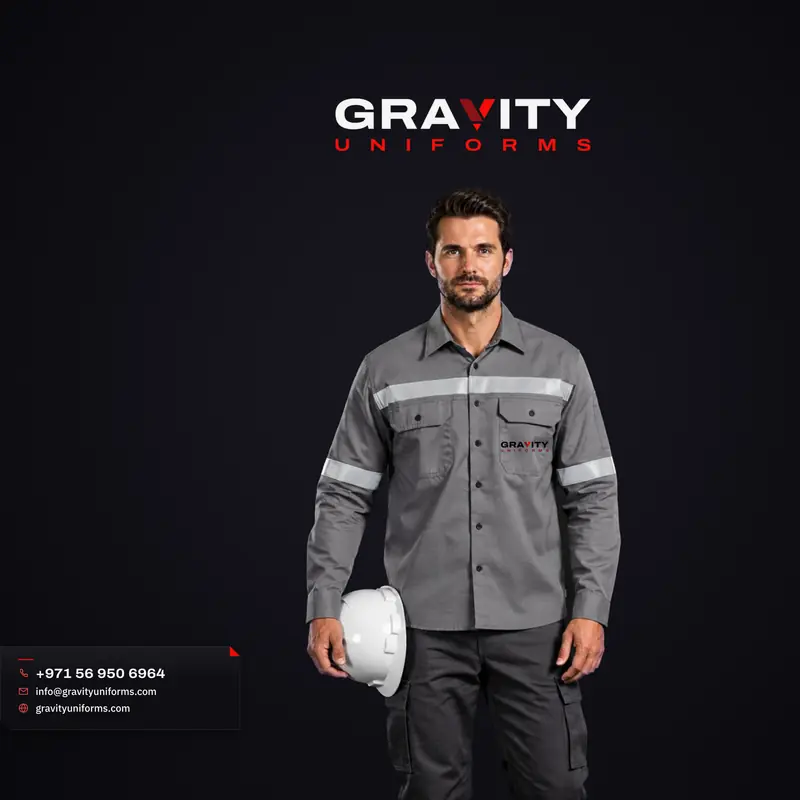
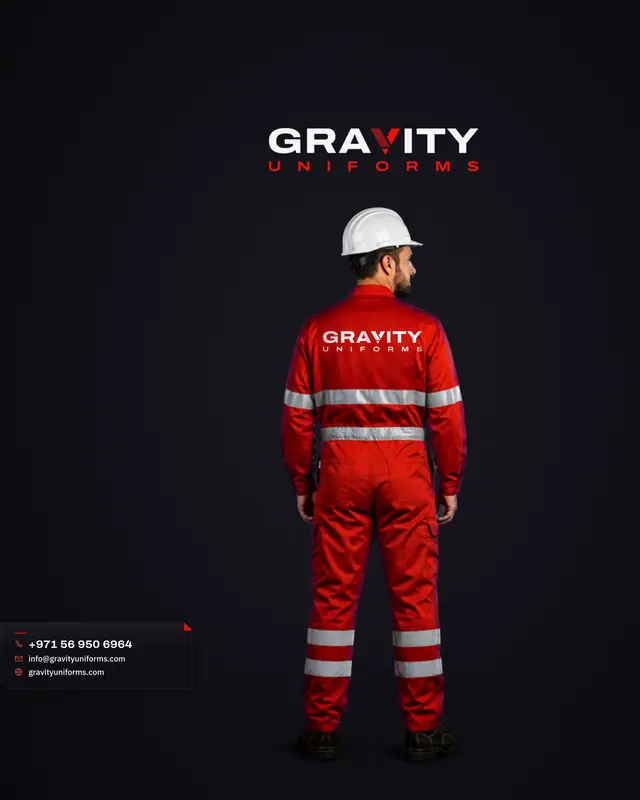
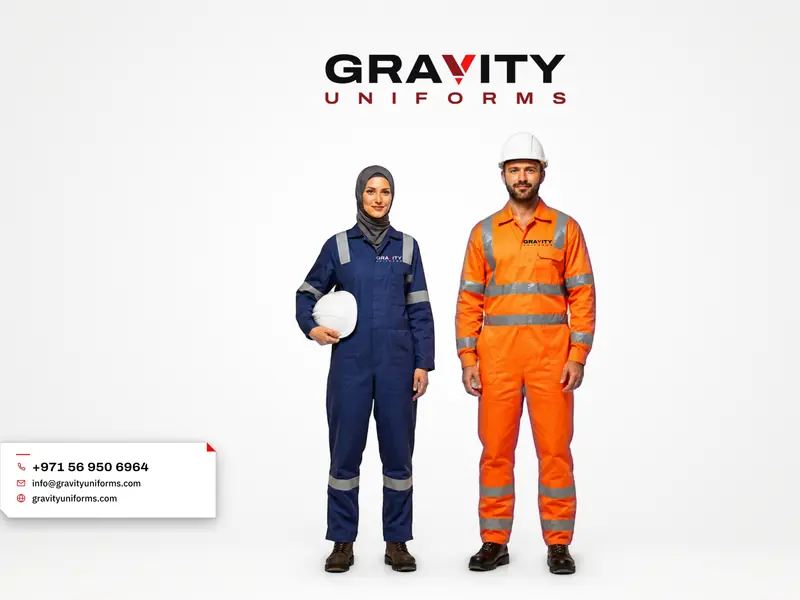
Every picture is built around one decision a buyer has to make. A coverall is shown with the reflective tape where crews usually need it, around the chest, arms and lower legs, and with the logo on the left chest or printed large across the back. A work shirt shows the pocket style and the tape across the chest and sleeves. The caption under each item names the fabric family, the cut and the branding method, so you can point to it in a brief.
The videos are short and captioned, because most buyers watch them on a phone without sound. A representative in a Gravity Uniforms polo introduces the garment, then the video moves to the details: zip and closures, waist, knee reinforcement, tape bands and the size of the chest logo.
Using the gallery to brief an order
Choose a sector to see only its garments, then send us the picture closest to what your crews need, with the roles, the number of people and any safety standard your site works to. We reply with the garments and fabrics we propose for each role and, when the request has full details, a quotation within 10 minutes.
You can also use a picture to settle a detail inside your team before you order: the colour of the coverall, whether supervisors get a different shirt, how wide the reflective tape should be, or whether the company name goes on the back. Approved designs stay on file, so a reorder or a new crew gets the same garment.
Logo size and reflective tape placement
A left-chest logo on a shirt or coverall is usually about 8 to 10 cm wide and is embroidered, so it stays readable through industrial washing. A back print is much larger, so a crew can be recognised across a shared site; it is printed or embroidered depending on the fabric. We confirm the exact sizes with you on a sample before production.
Reflective tape is placed to your hi-vis specification, not ours. If your site names a standard and class, tell us at enquiry stage and we confirm which garments meet it before quoting; we never describe a garment as compliant unless it is. On flame-retardant garments we confirm a branding method that does not reduce the protection.