Choose embroidery for logos on uniforms that must look professional and survive constant washing, such as shirts, polos, chef coats, scrubs, caps and jackets. Choose printing for large designs, full-colour artwork, lightweight or performance fabrics and event T-shirts. Embroidery cost is driven mainly by the size and density of the design, while printing cost depends on the method, the number of colours and the quantity.
Both methods can look excellent, and many uniform programmes use both. The right choice depends on the garment, the artwork, how often the garment will be washed, and the number of pieces. This guide compares the two and explains what drives cost so you can brief your supplier with confidence.
How each method works
Embroidery
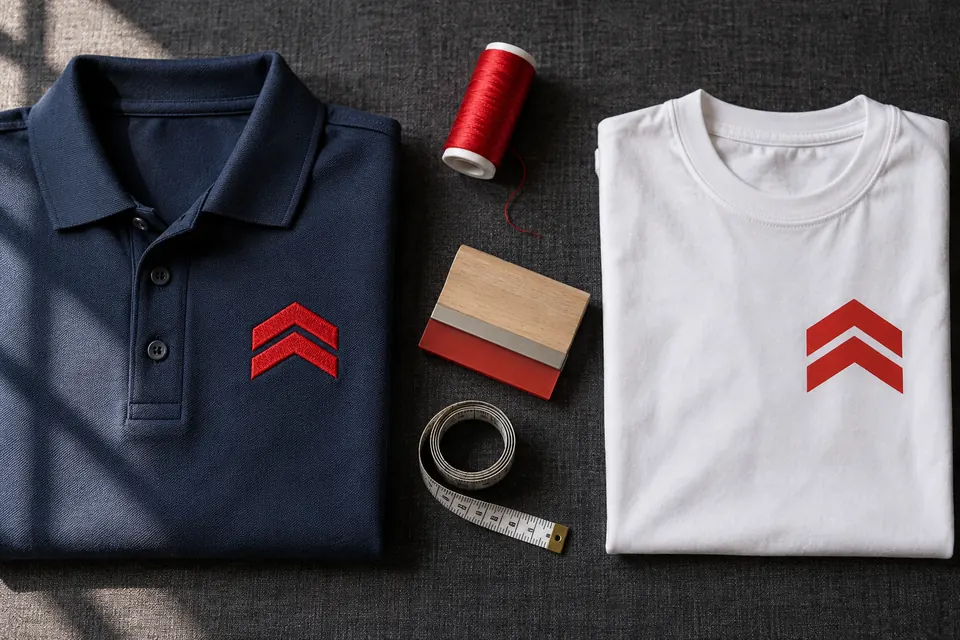
Embroidery stitches your logo into the fabric with thread. The logo is first digitised, meaning it is converted into a stitch file that tells the machine where each stitch goes. Thread colours are matched to your brand colours, and a sample is stitched on the actual garment for approval. Once approved, the file is kept for reorders.
Printing
Printing applies ink or a transfer to the surface of the fabric. The main methods are:
- Screen printing: ink pushed through a mesh screen, one screen per colour. Bright, durable and economical for larger runs of the same design with a limited number of colours
- DTF (direct-to-film): a full-colour design printed onto film and heat-pressed onto the garment. Handles gradients and photographic detail, and suits smaller runs
- Heat transfer: used for individual names, numbers and variable text
- Sublimation: dye that becomes part of light-coloured polyester fabric, used for all-over designs such as sports jerseys
Side-by-side comparison
| Factor | Embroidery | Printing |
|---|---|---|
| Look | Textured, raised, premium | Flat, smooth, can be very detailed |
| Durability | Very high; does not crack or peel | Good to high, depending on method and care |
| Best garments | Shirts, polos, jackets, caps, chef coats, scrubs, aprons, bags | T-shirts, hoodies, sportswear, large back designs |
| Artwork | Best with clear shapes and limited fine detail | Handles gradients, photos and many colours |
| Logo size | Best for small to medium logos | Small to very large designs |
| Fabric | Medium to heavy fabrics; can pucker very thin or stretchy fabric | Most fabrics; method depends on fibre |
| Personalised names | Excellent, very durable | Good with heat transfer |
What drives the cost of embroidery
- Stitch count: larger and more densely filled designs take more stitches and more machine time
- Digitising: a one-off setup to create the stitch file, reused for every reorder
- Number of positions: a chest logo plus a sleeve logo plus a back design is three separate runs
- Garment type: caps and bags need different setups from flat garments
- Personalisation: individual names add a step for each garment
- Quantity: unit cost usually falls as quantities increase
To keep embroidery cost-effective, simplify very fine details, use a sensible size for the position, and avoid large filled areas where an outline or smaller logo would look just as good. Our embroidery service includes digitising, thread matching and a stitched sample before production.
What drives the cost of printing
- Method: screen printing needs a screen per colour, which is efficient for larger runs; DTF has little setup and suits short runs
- Number of colours: matters most for screen printing
- Print size and number of positions
- Garment colour: printing on dark garments may need an extra underbase layer
- Quantity: setup costs are spread across more pieces in larger runs
Durability in real life
Embroidery is the most durable option for garments that are washed after every shift. It does not crack, peel or fade like some prints can, which is why most corporate, hospitality, healthcare, school and security uniforms use embroidered logos.
Printed logos last well when the method suits the fabric and the garment is cared for properly: washing inside out, avoiding very hot washes where the label says so, and never ironing directly on the print. Screen prints and DTF are a good choice for staff T-shirts and event wear. Heat-transfer names can wear over time on garments that are washed very hot and often, so for long-term personalisation on workwear, embroidered names usually last longer.
When to use which
Choose embroidery when:
- The garment is a shirt, polo, jacket, cap, chef coat, apron or scrub top
- The uniform will be washed very often or at high temperatures
- You want a premium, professional finish
- You need staff names that last
Choose printing when:
- The design is large, such as a back print on T-shirts or coveralls
- The artwork has gradients, photographs or many colours
- The fabric is lightweight, very stretchy or a performance knit
- You need event, campaign or National Day T-shirts in bulk
Many programmes combine both: embroidered logos on polos and jackets, printed designs on T-shirts and sports kit. Our polo shirts are a good example of a garment that suits either method, depending on the look you want.
Common logo positions
Where the logo goes affects both the look and the method. Agree positions for each garment at the sample stage and record them, so every reorder matches:
- Left chest: the classic position for shirts, polos, scrubs and chef coats, usually embroidered
- Sleeve: a second, smaller logo, a flag or a department badge
- Back: large logos or company names on coveralls, T-shirts and event wear, often printed
- Cap front: almost always embroidered for a crisp, raised finish
- Apron bib: embroidered for restaurants and cafes, printed for large or colourful designs
- Name position: right chest or under the logo, embroidered for daily workwear
Preparing your artwork
A vector file, such as AI, EPS, PDF or SVG, gives the best results for both methods. A clear, high-resolution image can also work. For embroidery, expect the digitiser to adjust very small text or fine lines so they stitch cleanly. For printing, ask for a proof showing size, colours and placement before production. See our T-shirt printing service for print methods and artwork guidance.
Quick answers
Is embroidery or printing more durable?
Embroidery is generally the more durable choice for uniforms washed often. Good-quality prints also last well when the method suits the fabric and the garment is cared for correctly.
Is embroidery more expensive than printing?
It depends on the design and quantity. Embroidery cost rises with the size and density of the design; screen printing cost rises with the number of colours, and DTF suits short runs. Ask for quotes on both for your artwork.
Can you embroider a detailed logo?
Most logos can be embroidered. Very fine lines and tiny text may need simplifying so they stitch cleanly, and a stitched sample shows you the result before production.
Which is better for staff names?
Embroidered names are the most durable for daily workwear. Heat-transfer names suit sports kit and event wear.
Not sure which suits your logo? Send us your artwork and garments, or bring them to our Ras Al Khaimah showroom, and we will show you stitched and printed samples and recommend the best method with a quotation.