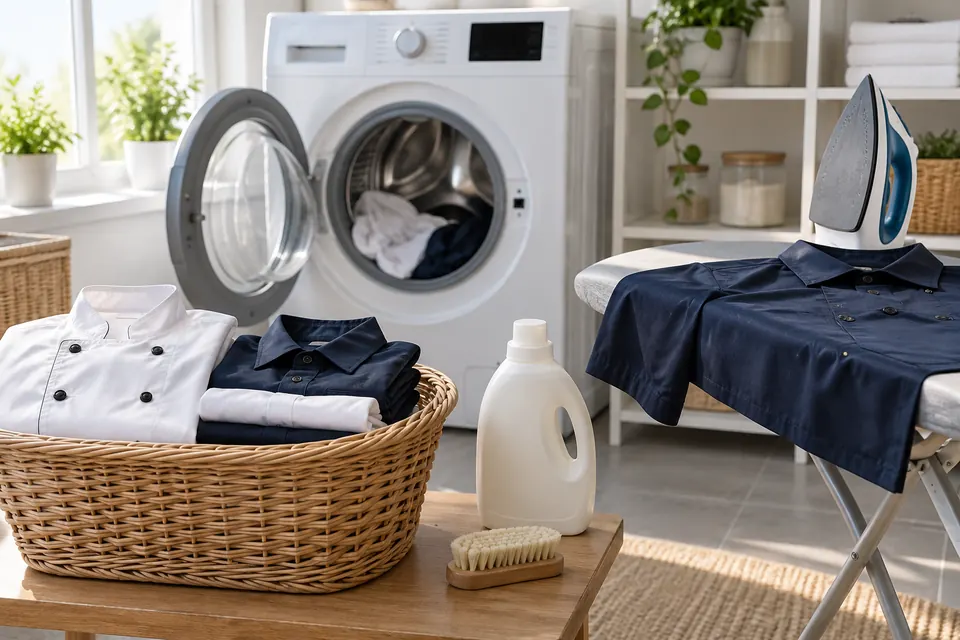
To make uniforms last, follow the care label, wash garments inside out with similar colours, use the lowest temperature that gets them properly clean unless your hygiene policy requires hotter washing, avoid bleach on coloured items, and dry them in shade or on a low tumble setting. Rotate several sets per person, treat stains quickly, and repair small damage early. These habits protect colours, logos and fit, and can noticeably extend the working life of every garment.
Uniforms are washed far more often than everyday clothing, sometimes after every shift. That makes laundering the biggest single factor in how long they last and how good they look. This guide covers practical care for the main types of uniform, how to protect embroidered and printed logos, how to deal with common stains, and how to work with a commercial laundry.
The basics that apply to almost every uniform
- Read the care label and follow it. It reflects the fabric, colours and any special finishes.
- Sort by colour: whites, lights, darks and bright colours separately. New dark garments are most likely to bleed in the first few washes.
- Turn garments inside out, especially those with logos, prints or dark colours.
- Close zips and fasten buttons and hook-and-loop tabs, so they do not snag other items.
- Do not overload the machine. Garments need room to move to get clean and to avoid creasing.
- Use the right amount of detergent. Too much leaves residue that dulls colours and can irritate skin.
- Avoid chlorine bleach on coloured garments; it strips colour quickly.
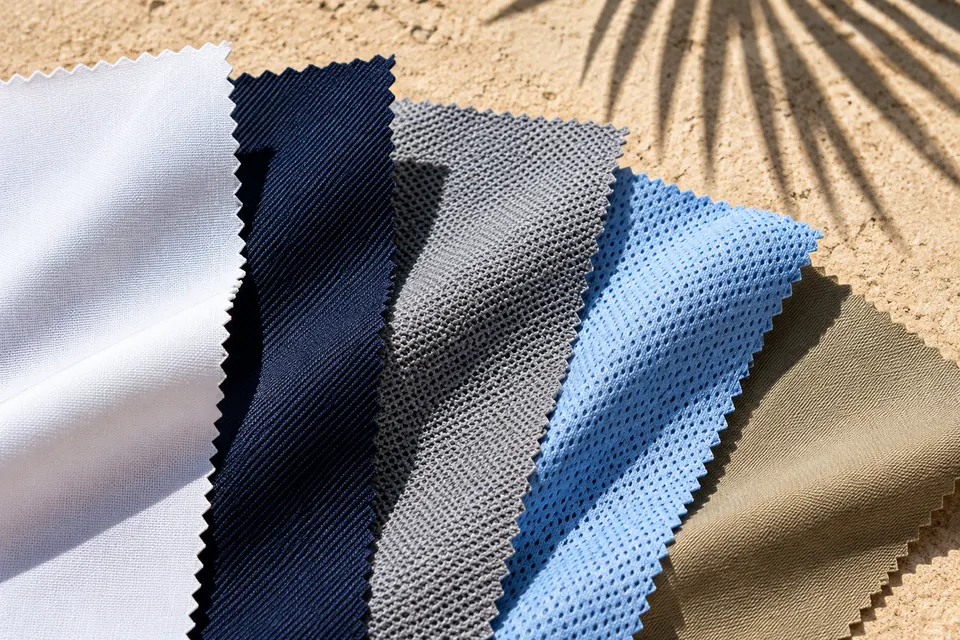
- Dry in shade or on a low tumble setting. Strong direct sun fades colours, and high heat can shrink cotton and damage prints.
Care by garment type
| Garment | Washing tips | Watch out for |
|---|---|---|
| Corporate shirts and blouses | Wash inside out with similar colours; hang to dry and iron while slightly damp | Collars and cuffs: pre-treat before washing |
| Chef coats and kitchen whites | Wash separately from colours at the temperature the label allows; pre-treat grease | Do not mix with coloured aprons or trousers |
| Scrubs | Follow your facility's laundering policy; wash dark and bright colours with similar colours | Fabric softener can affect some finishes |
| Housekeeping tunics and aprons | Wash frequently; colour-fast poly-cotton handles regular washing well | Strong detergents can fade dark colours over time |
| Hi-vis garments | Follow the label closely; avoid bleach and fabric softener | Fluorescent colours and reflective tape wear with washing and sun |
| Coveralls and workwear | Pre-treat oil and grease; wash separately from lighter items | Close zips; check reflective tape after washing |
| Suits and blazers | Spot clean and press; dry clean as the label recommends | Do not machine wash unless the label allows it |
| Printed T-shirts | Wash inside out; avoid very hot washes | Never iron directly on the print |
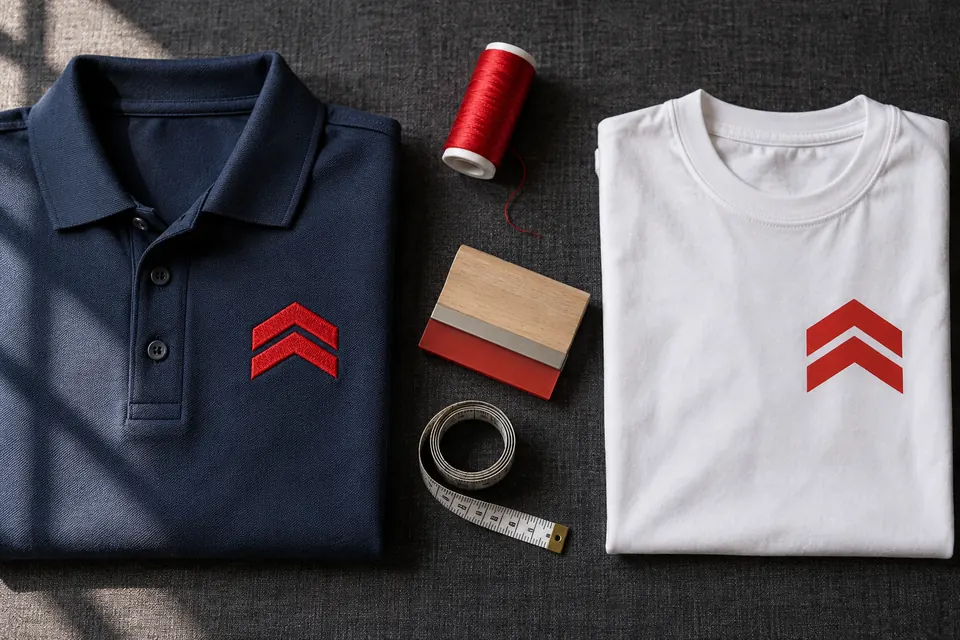
Protecting embroidered and printed logos
Logos are often the first part of a uniform to look tired. To protect them:
- Wash garments inside out so logos are not rubbed against the drum and other items
- Avoid ironing directly over embroidery; iron from the reverse with a cloth between the iron and the logo
- Never iron directly on prints or heat-transfer names
- Avoid very high drying temperatures for printed garments
- Keep sharp items, such as name-badge pins and pens, away from embroidered areas
Embroidery is generally the most durable option for garments washed this often. Our embroidery service uses your approved stitch file and thread colours for every reorder, so replacement garments match the rest of the team.
Treating common stains
Act quickly. Stains that have dried or been through a hot wash are much harder to remove.
- Grease and oil (kitchens and workshops): scrape off excess, apply detergent directly to the stain and leave it to work before washing
- Food and drink (restaurants and hotels): rinse with cold water from the back of the fabric, then pre-treat
- Blood and protein stains (healthcare): rinse in cold water first; hot water can set protein stains
- Sweat marks (all roles): wash promptly; leaving sweaty garments in a bag for hours makes marks and odours harder to remove
- Ink: dab, do not rub, and test any stain remover on an inside seam first
Working with a commercial laundry
Many hotels, hospitals and large employers send uniforms to a commercial laundry. To protect your investment:
- Share the fabric composition and care labels of each garment with the laundry before the first wash.
- Agree wash temperatures and chemicals for each garment type, including hi-vis and any garments with special finishes.
- Label garments with the employee's name or a code, so items return to the right person.
- Check returned garments regularly for fading, shrinkage and damage, and raise problems early.
- Tell your uniform supplier how garments are laundered, so they can recommend fabrics that will last in that process.
Rotation, storage and repairs
Rotating several sets per person means each garment is washed less often and lasts longer. Hang tailored garments such as blazers and front-office jackets on proper hangers, and store spare stock folded, clean and away from direct sunlight.
Repair small problems early: a loose button, a small tear or a failing hem quickly becomes a garment that cannot be worn. Our tailoring and alterations service handles repairs, resizing and adjustments, including for uniforms made by other suppliers.
Give staff a simple care card
Most care problems happen at home, not in the laundry. A short care card issued with each uniform helps staff look after their garments:
- Wash inside out with similar colours
- Follow the temperature on the label
- No bleach on coloured items
- Dry in shade or on low heat
- Iron on the reverse, never on logos or prints
- Report damage early so it can be repaired
When to replace a uniform
Replace garments when they are faded so much that the team no longer looks consistent, when fabric becomes thin or shiny, when seams or hems fail repeatedly, when logos or names are damaged, or when hi-vis has lost its brightness or reflective tape is worn. Replacing a whole department at once keeps the team looking uniform. For teams such as housekeeping and cleaning, whose uniforms are washed constantly, planning regular replacement is part of the budget.
Quick answers
How often should work uniforms be washed?
Most uniforms should be washed after each shift, especially in hot conditions or in kitchens, healthcare and cleaning roles. Having several sets per person makes this practical.
How do you stop uniform colours from fading?
Wash inside out with similar colours, use the lowest effective temperature allowed by the label, avoid bleach, use the right amount of detergent and dry in shade rather than strong direct sun.
Can embroidered logos be ironed?
Iron from the reverse side with a cloth between the iron and the embroidery. Never iron directly on printed logos or heat-transfer names.
Should fabric softener be used on uniforms?
Check the label. Softener is fine for many everyday garments, but it can reduce the performance of hi-vis, moisture-wicking and some specially finished fabrics.
Want uniforms that are easier to care for? Visit our Ras Al Khaimah showroom to compare colour-fast, easy-care fabrics, or tell us how your uniforms are laundered and we will recommend fabrics and finishes that last, with a quotation.