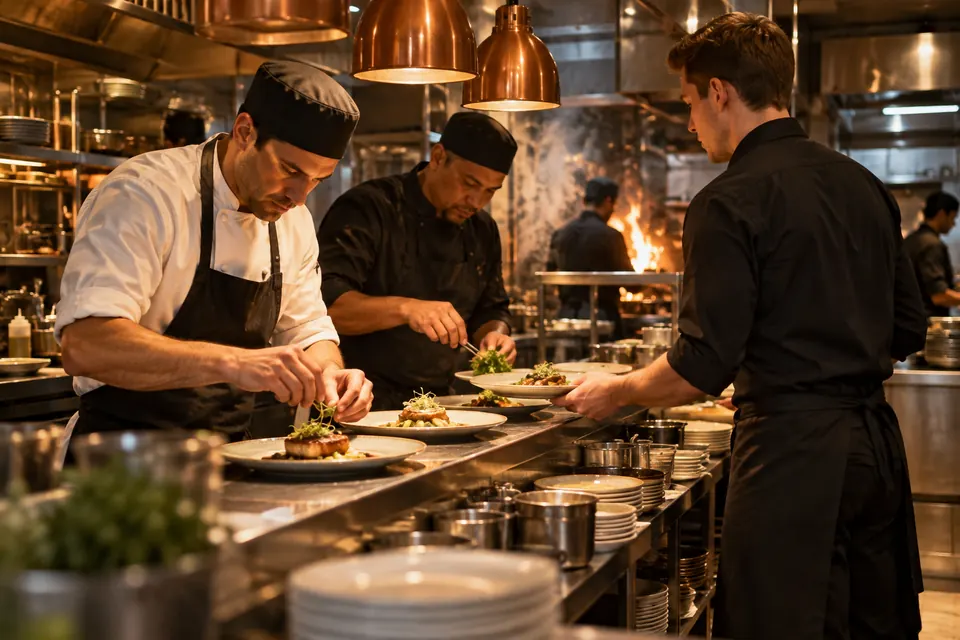
A good restaurant uniform programme dresses the kitchen and the floor as one brand: breathable chef coats, trousers, aprons and caps for the kitchen, and easy-care shirts, waistcoats or polos with practical aprons for front-of-house. Choose fabrics for heat and daily washing first, then style, and brand everything consistently, usually with embroidery on chef coats and aprons.
In food service, the uniform is part of the concept. A specialty cafe, a family restaurant, a fine-dining room and an event catering crew each need a different look, but all need garments that survive spills, heat and washing after almost every shift. This guide covers what each role needs, how to choose fabrics, and how to plan quantities and branding.
Start with the concept, then the conditions
Before choosing garments, describe the dining experience you want guests to have. Relaxed and casual suggests polos, T-shirts and denim-look or canvas aprons. Smart and contemporary suggests shirts with waist aprons. Formal service suggests tailored waistcoats and long bistro aprons. Then list the working conditions: open kitchen or closed, outdoor terrace seating, delivery and catering work, and how much heat each station produces.
Kitchen uniforms: what chefs need
Chef coats
Chef coats protect against heat and splashes and project professionalism. Double-breasted fronts add a second layer of fabric over the chest and can be reversed to hide stains during service. For hot stations, look for breathable cotton or poly-cotton, lighter fabric weights and options with ventilated panels under the arms or across the back. Short sleeves suit many kitchens in the UAE; long sleeves give more protection near open flames and fryers.
Trousers
Classic check trousers hide marks well; black and plain colours look more contemporary. Elasticated or drawstring waists are comfortable through long shifts and suit a wide range of body shapes, which simplifies sizing.
Aprons and headwear
Bib aprons protect the whole front; waist aprons are cooler and easier to move in. Choose hard-wearing fabrics with adjustable neck straps and long ties so one apron fits staff of different heights. For headwear, chef caps, skull caps and hats keep hair contained; follow the food safety guidance that applies to your kitchen.
Showing the brigade
Many kitchens show hierarchy through coat colour, piping or embroidery, from executive chef to commis and stewarding. Embroidered names and titles on the chest make roles clear to new staff and to guests in open kitchens. See our chef uniforms for coats, trousers, aprons and caps in white, black and brand colours.
Front-of-house uniforms
Floor staff are your brand in motion. Their uniforms need to look good at the start and end of a busy service, stay comfortable while walking for hours, and cope with spills.
- Waiter shirts and blouses: breathable, easy-care blends that resist creasing and need little or no ironing
- Waistcoats: a tailored layer for fine dining, bars and banqueting
- Polos and T-shirts: practical for cafes, casual dining and quick-service counters
- Aprons: bib, waist and bistro styles, with pockets sized for order pads, pens and phones
- Caps: for barista counters, food trucks and delivery crews
Darker colours and small patterns hide spills better than pale plain fabrics. If your concept calls for white shirts, choose fabrics that tolerate hot washing and plan extra sets.
Details to check at the sample stage
Small design decisions make a big difference during a busy service, and they are easiest to fix before production. When samples arrive, ask a few staff from each role to wear them through a real shift and check:
- Apron pockets are big enough for order pads, pens and phones, and placed where hands naturally reach
- Neck straps adjust and ties are long enough for different heights
- Chef coat sleeves do not catch on pans, and cuffs can be rolled if needed
- Shirts stay tucked in when staff reach and carry trays
- Fabric still looks presentable after a few washes the way your laundry does them
Role-by-role overview
| Role | Core garments | Fabric priorities | Branding |
|---|---|---|---|
| Head and sous chef | Chef coat, trousers, apron | Breathable, durable, tolerates hot washing | Logo plus embroidered name and title |
| Line cooks and commis | Chef coat, trousers, apron, cap | Light, breathable, easy to wash | Logo, optional name |
| Stewarding | Work shirt or tunic, trousers, apron | Hard-wearing, quick-drying | Logo |
| Waiters | Shirt or blouse, waistcoat or apron | Easy-care, crease-resistant, stain-resistant | Logo on shirt or apron |
| Baristas | T-shirt or polo, apron, cap | Breathable knit, sturdy apron fabric | Logo on apron and cap |
| Hosts and managers | Shirt, blazer or waistcoat | Smooth, presentable all day | Discreet logo |
| Catering and delivery | Polo, T-shirt, cap, jacket | Moisture-wicking, colour-fast | Large, visible logo |
Fabrics that survive the kitchen and the laundry
Restaurant uniforms are washed after almost every shift, often by a laundry partner. Colour-fast fabrics, reinforced seams and shirts that hold their shape save money over time. For chef whites, choose fabrics that tolerate the higher wash temperatures needed to remove grease and food stains. For aprons, canvas and twill fabrics soften with washing rather than wearing thin. Ask your supplier how each fabric behaves after repeated washing before you decide.
Branding: embroidery or print?
Embroidery is the most durable option for chef coats, shirts and aprons, and looks refined in a dining room. Printing can suit T-shirts for casual concepts, event crews and delivery teams, especially for large or colourful designs. Many restaurants combine both: embroidered logos on chef coats and aprons, printed designs on staff T-shirts. Our embroidery service digitises your logo once and keeps the file on record so reorders match.
How many sets to order
Plan for the laundry cycle, not just headcount. Each person needs a clean uniform every shift while others are in the wash, plus spares for spills and burns. Chefs and kitchen staff usually need more spares than floor staff because their garments get dirtier faster. Keep a few extra aprons and caps on hand for new joiners and busy weekends.
New openings and multi-branch groups
For a new opening, plan design, sampling and production around your launch date, and allow time for staff to try uniforms during pre-opening training. For restaurant groups, keep each brand's approved designs on file, pack orders by outlet, and agree how new branches will order. Our restaurant and cafe uniforms page explains how we support single outlets and groups.
Quick answers
What fabric is best for a chef coat in the UAE?
Breathable cotton or poly-cotton in a lighter weight, ideally with ventilated panels for the hottest stations. White fabrics should tolerate hot washing.
Why are chef coats double-breasted?
The double front adds an extra layer of protection against heat and splashes, and it can be reversed to hide stains during service.
Can restaurant aprons have our logo?
Yes. Embroidery suits most aprons and lasts well; printing can work for large or colourful designs on suitable fabrics.
Should kitchen and floor uniforms match?
They do not need to be identical, but they should share colours and branding so the restaurant looks like one brand, especially if the kitchen is open to diners.
Opening a restaurant or refreshing your team's look? Send us your concept, logo and staff numbers, or visit our Ras Al Khaimah showroom, and we will suggest a matching kitchen and front-of-house range with a clear quotation.