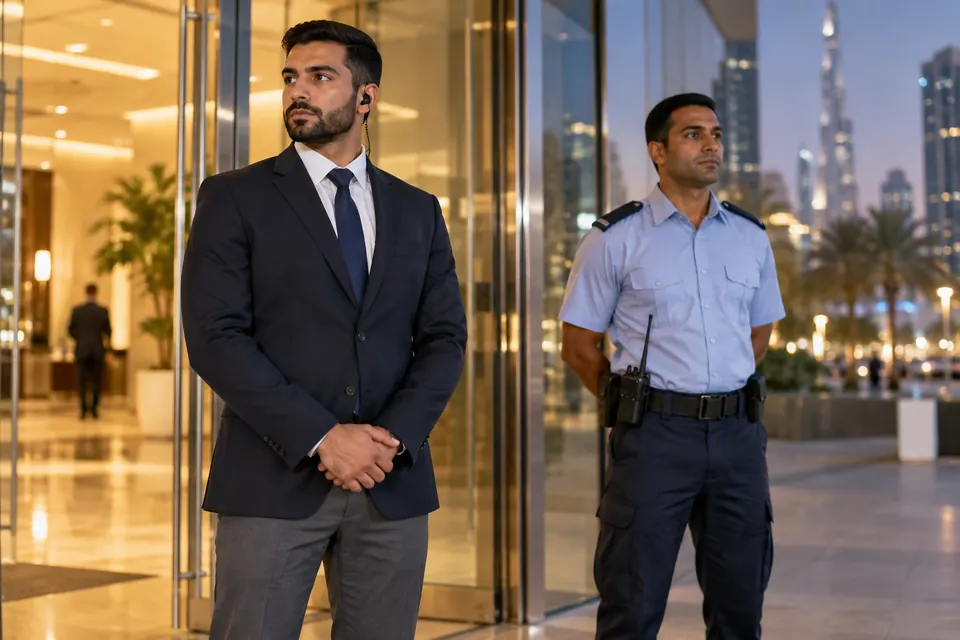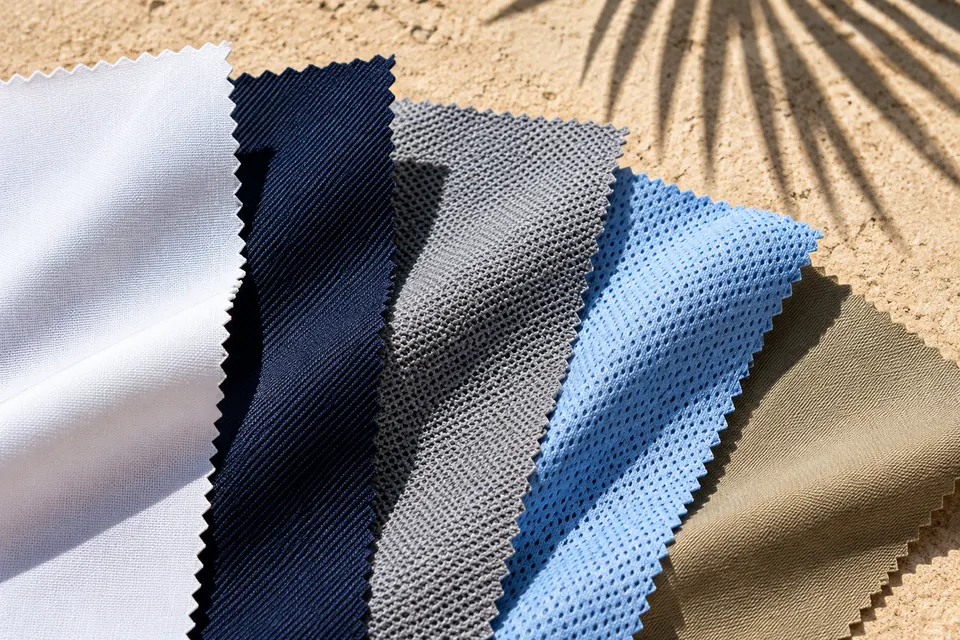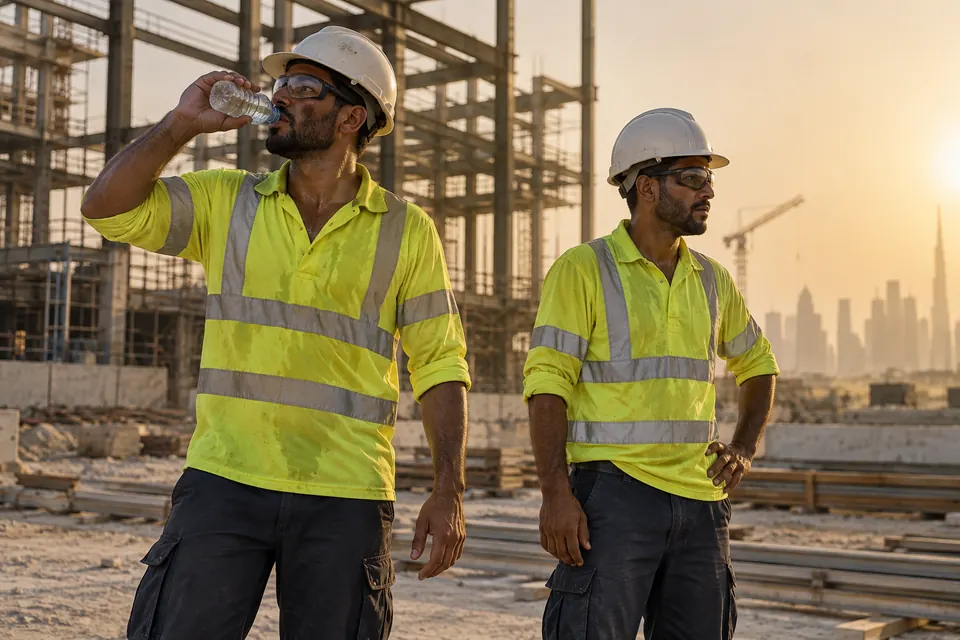
For UAE summers, the best industrial workwear is lightweight, breathable cotton or poly-cotton in a light colour, with ventilation in the hottest areas, long sleeves for sun protection where the job allows, and hi-vis that is light enough to wear all shift. Match each garment to the role and the site's safety requirements first, then choose the lightest fabric that still does the job, and supply enough sets for workers to change into clean, dry kit.
Industrial workwear in the UAE has to balance two things that pull in opposite directions: protection and heat. Workers need durable garments that meet site safety rules, yet heavy or non-breathable clothing becomes a real problem in summer. This guide explains how to choose workwear, coveralls and hi-vis that keep crews protected and as comfortable as possible.
Workwear is one part of heat safety
Each summer, the UAE authorities announce a midday break for outdoor work during the hottest months. Check the official announcement each year for the current dates, hours and any exemptions, and follow your company's heat-stress procedures. Workwear does not replace rest breaks, shade, water and supervision, but the right garments make a real difference to how workers feel during the hours they are working outdoors.
Start with the role and the site rules
Before choosing fabrics, list each role, where it works and what protection the site requires:
- General duties, maintenance and workshops, where comfort and durability come first
- Roadside, port, warehouse and yard work, where visibility is essential
- Work near heat, flame or electrical risk, where your risk assessment may require flame-retardant garments
- Indoor production lines in air conditioning, where lighter garments are fine all year
Tell your supplier the safety standards your site works to and ask them to confirm in writing which garments and fabrics meet them before you order. Never trade required protection for comfort; look for the most comfortable garment that still meets the requirement.
Choosing fabrics for heat
| Fabric | Comfort in heat | Durability | Best for |
|---|---|---|---|
| Lightweight cotton | Breathable, soft, slow to dry | Moderate | Indoor maintenance, workshops, general duties |
| Poly-cotton | Breathable, quicker drying | High; holds colour through industrial washing | Most outdoor crews and coveralls |
| Moisture-wicking polyester knit | Cool in active work, dries fast | High | Hi-vis polos and T-shirts for outdoor teams |
| Heavier twill | Warmer | Very high | Trousers and high-abrasion work |
| Flame-retardant fabrics | Varies by fabric | High | Only where the risk assessment requires it |
Fabric weight matters as much as fibre. A lighter fabric with reinforced stitching at stress points can often last as well as a heavier one while feeling much cooler. Ask to compare weights side by side and, ideally, have workers wear samples through a real shift.
Design details that help in summer
- Ventilation: back vents, underarm panels or mesh in low-risk areas let heat escape
- Long sleeves in light fabric: protect skin from direct sun where the job allows
- Light colours: reflect more sun than dark shades, though darker colours hide dirt better
- Relaxed fit: allows air to circulate and makes movement easier
- Caps with neck protection: for crews who spend long hours in direct sun
- Practical pockets: for tools and phones, so workers are not carrying extra bags
Coveralls in the heat
Coveralls give full-body protection and a professional look, but they can be the hottest garment on site. Choose lighter cotton for indoor maintenance and workshops, and poly-cotton for outdoor crews who need durability and quicker drying. Full-length front zips make it easy to open the coverall during breaks. Elasticated waists improve fit without adding bulk. For some roles, a two-piece work shirt and trousers may be cooler and more practical than a one-piece coverall. Our coveralls come in cotton, poly-cotton, hi-vis and flame-retardant options.
Hi-vis that workers will actually wear
Hi-vis only protects workers who keep it on. In summer, heavy hi-vis jackets get removed. Practical options include:
- Lightweight mesh vests over a breathable work shirt
- Hi-vis polos or T-shirts in moisture-wicking fabric
- Work shirts and trousers with reflective tape added at agreed positions
- Hi-vis coveralls for roadside and port work
If your site or client specifies a hi-vis standard, such as the international EN ISO 20471 standard, ask your supplier to confirm in writing that the garment is made to it. Agree the position of reflective tape at the sample stage, and remember that fluorescent colours and reflective tape can lose performance over time with sun and washing, so replace worn items.
Branding workwear
Embroidered or printed logos on the chest and back make crews easy to identify on shared sites. Embroidery is very durable; printing can suit large back logos on lighter garments. Make sure branding does not cover reflective tape or reduce visibility. Our industrial workwear range includes work shirts, cargo trousers, coveralls and hi-vis, branded with your logo.
Sets, sizes and laundering for crews
In summer, workers sweat through garments quickly. Supplying enough sets for a clean, dry change each shift is good for comfort and hygiene. When ordering for large crews:
- Work from a size breakdown or measure workers on site, shift by shift
- Pack orders by crew, site or shift so supervisors can hand out kit without sorting
- Keep a buffer of common sizes for new workers and replacements
- Follow the care label, especially for hi-vis and flame-retardant garments, as the wrong washing can reduce performance
- Avoid high-temperature drying for garments with reflective tape unless the label allows it
A pre-summer checklist for site managers
Reviewing workwear in spring, before the hottest months arrive, gives time to order replacements and trial lighter options. Before summer starts, check that:
- Every worker has enough sets for a clean, dry change each shift
- Faded hi-vis and worn reflective tape have been replaced
- Lighter fabric options have been trialled for the hottest roles
- Caps with neck protection are available for crews in direct sun
- Safety footwear is in good condition; we can supply high and low ankle safety shoes and boots alongside garments
- New starters for summer projects have been sized and their kit ordered
Quick answers
What is the best workwear fabric for UAE summers?
Lightweight, breathable cotton or poly-cotton for most roles, with moisture-wicking polyester knits for hi-vis polos and T-shirts. Choose the lightest fabric that still meets your site's safety requirements.
Are coveralls too hot for summer work?
They can be. Lighter cotton or poly-cotton coveralls with front zips help, and for some roles a two-piece work shirt and trousers is a cooler alternative.
How can hi-vis be cooler?
Use lightweight mesh vests over breathable shirts, or hi-vis polos and T-shirts in moisture-wicking fabric, instead of heavy jackets.
Does workwear replace the summer midday break?
No. The midday break and your heat-stress procedures come first. Good workwear simply makes the working hours more comfortable.
Preparing crews for the summer or a new project? Share your crew size, roles and site safety requirements through our contact page, and we will recommend fabrics, garments and hi-vis with clear pricing.