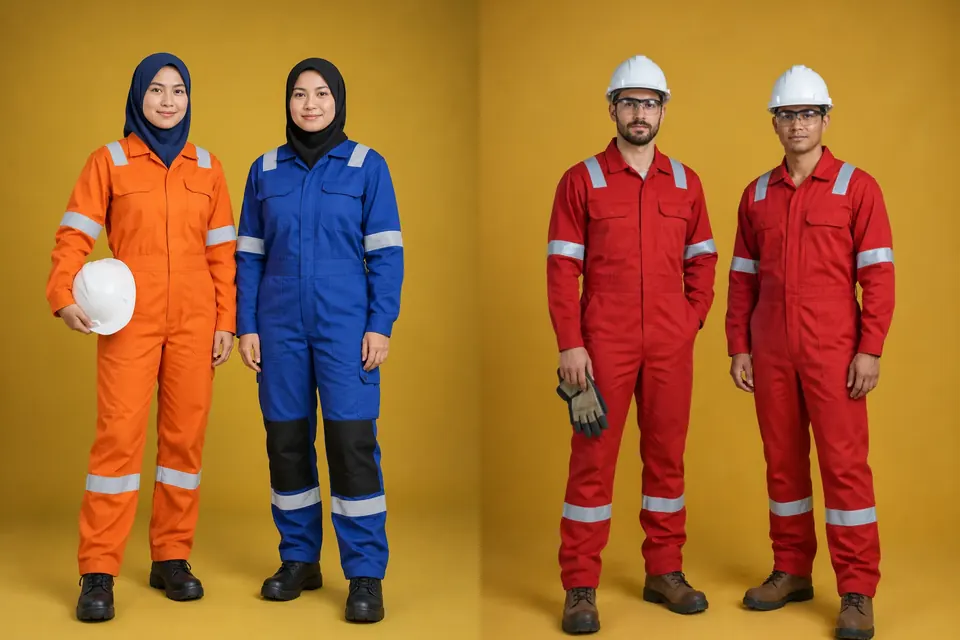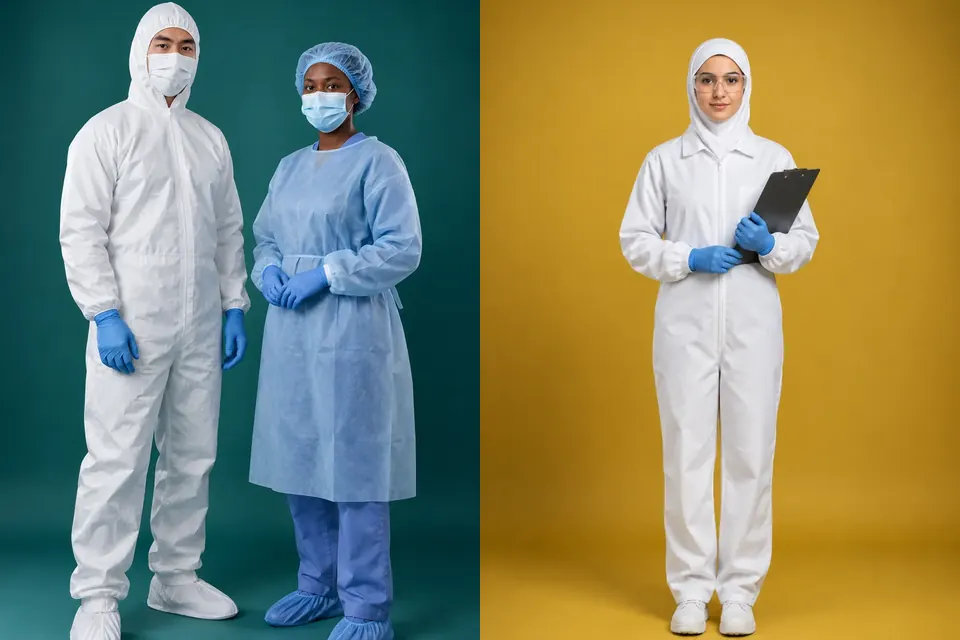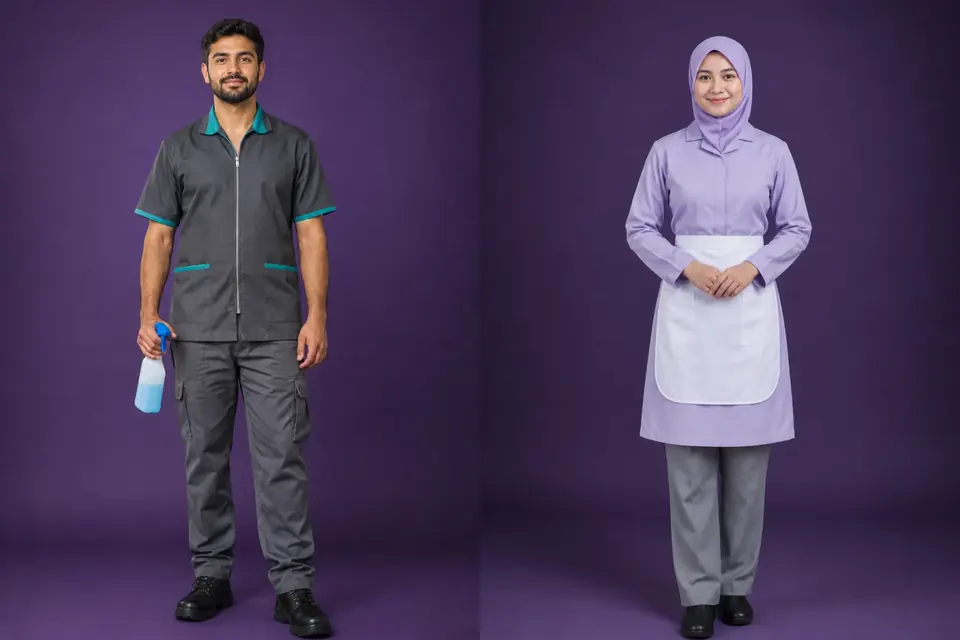
For a cleaning or facility management (FM) company, the best cleaning uniform is a colour-fast poly-cotton tunic or polo with trousers in a darker shade, branded with your company name on the chest and back, with a contrasting colour or marking for supervisors. Order by contract and site, plan three to five sets per cleaner depending on who does the laundry, and budget for replacements every year, because cleaning uniforms wear out faster than almost any other.
This guide is about running uniforms across many contracts: offices, malls, hospitals, schools, residential towers and industrial sites, each with its own client expectations. The garments themselves, from room attendant tunics to deep-cleaning coveralls, are on our page for housekeeping and cleaning uniforms.
Why do FM companies need a uniform plan, not just an order?
A cleaning company's uniform is worn in someone else's building. Your client sees it every day, and in many contracts the client's specification says what your staff must wear. Turnover is high, staff move between sites, and garments are washed far more often than an office shirt. A plan that sets the garments, colours, sets and replacement cycle once, then repeats them for every new contract, saves money and keeps every site looking the same.
Which roles does a cleaning contract usually include?
| Role | Typical garments | What matters most |
|---|---|---|
| Office and mall cleaners | Branded polo or tunic, trousers, optional cap | A neat look in public areas, comfort for walking all shift |
| Washroom attendants | Tunic or polo with a waterproof apron | Splash protection, quick-drying fabric |
| Hospital and clinic cleaners | Tunic and trousers in a colour agreed with the hospital, disposable aprons or coveralls for isolation areas | Following the hospital's infection-control dress code |
| Car park, outdoor and façade teams | Hi-vis polo or vest, cargo trousers, cap | Visibility near vehicles and sun protection |
| Deep cleaning and kitchen crews | Coveralls, with disposable coveralls for chemical or dirty tasks | Protection from chemicals and grease |
| Supervisors and site leads | A contrasting tunic or shirt, name embroidered | Clients and staff must find them quickly |
Which fabrics survive daily washing and cleaning chemicals?
Cleaning uniforms are washed after almost every shift and splashed with detergents and disinfectants. Colour-fast poly-cotton is the workhorse: it keeps its shape and colour, dries quickly and costs less over a year than pure cotton, which fades and shrinks. A small amount of stretch helps staff who bend and reach all day. No uniform fabric is fully bleach-proof, so choose darker shades or small patterns for roles that handle bleach-based products, and rinse splashes quickly.
| Fabric | Strengths | Best for |
|---|---|---|
| Colour-fast poly-cotton | Tough, economical, keeps colour through frequent washes | Large FM teams, trousers, tunics |
| Poly-cotton with stretch | Moves with the body, keeps its shape | Room attendants, washroom and detail cleaning |
| Pique or performance polo | Cooler for staff walking long distances | Mall, office and car park teams |
| Waterproof or heavy cotton apron | Protects the uniform from water and splashes | Washrooms, kitchens, wet tasks |
Our uniform fabric guide explains the weights and finishes of these fabrics in more detail.
How should cleaning uniforms be colour-coded?
Colour coding a cleaning workforce answers two questions: who is in charge, and who works where. Keep it simple, because every extra colour multiplies the stock you have to hold. Three approaches work well, and many companies combine two of them:
- By role: one colour for cleaners, a contrasting colour for supervisors, and hi-vis for outdoor and car park staff
- By client or site: a client-specific colour or sleeve label for a flagship contract that asks for it, the company standard everywhere else
- By hygiene zone: in hospitals and food plants, a different tunic colour for staff who work in isolation, clean or food areas, so they are not moved between zones by mistake
Many cleaning companies already colour-code cloths, mops and buckets by area. Uniform colours are a separate system; choose shades that do not clash with or confuse the equipment code your teams use.
How many uniform sets does each cleaner need?
The answer depends on who washes the uniforms. When the company launders them centrally, three sets per person usually cover one worn, one in the wash and one spare. When staff wash their own at the accommodation, four or five sets are safer, because laundry is less regular and garments take longer to come back. Add a small buffer of common sizes at each large site for new joiners and accidents.
| Laundry arrangement | Sets per cleaner | Replacement cycle |
|---|---|---|
| Central company laundry | 3 | Typically every 12 months |
| Staff wash at the accommodation | 4 to 5 | Typically every 6 to 12 months |
| Hospital or food-plant laundry under the client's rules | As the client's policy requires | As garments fade or wear |
How should cleaning uniforms be laundered?
- Wash at the temperature on the care label; poly-cotton generally takes frequent, warm washes well
- Rinse chemical splashes as soon as possible, before they bleach or mark the fabric
- Wash coloured uniforms apart from whites and from cleaning cloths
- Dry in the shade or indoors, so colours stay even across the team
- Issue each cleaner a named laundry bag so sets come back to the right person
Our uniform care and laundering guide covers stains, storage and when to replace.
How do you order cleaning uniforms for a new contract?
- List the roles and headcount for the contract and any dress requirements in the client's specification
- Choose garments and colours from your company standard, adding client-specific items only where the contract asks
- Collect sizes: a measuring visit at the site, a size list from your supervisors, or ready sizes from XS to 4XL
- Approve a sample with your logo and any client or role label
- Ask for packing by site, supervisor or employee, so the contract starts with every cleaner in uniform on day one
- Agree a top-up rhythm for new joiners, monthly or quarterly
There is no minimum quantity (minimum order value AED 750), and production and delivery take 5 to 30 days depending on the order type and quantity, so plan mobilisation uniforms as soon as the contract is awarded. We keep your approved designs, logo files and staff sizes on record, so a new contract or a replacement set matches the rest of your workforce. Large programmes run through our bulk uniform supply service, and our guide to ordering uniforms for a large workforce covers headcount and packing in more detail.
What branding works on cleaning uniforms?
- Your company logo on the left chest, embroidered so it survives daily washing
- Your company name printed or embroidered large on the back, so clients recognise your staff from a distance
- A client-site name or role label on the sleeve where a contract asks for it
- Names embroidered for supervisors, or name badges for the wider team
Quick answers
What is the best fabric for a cleaning uniform?
Colour-fast poly-cotton for most roles, with a little stretch for staff who bend and reach, and performance polos for staff walking long distances. Darker shades hide marks between washes.
How many sets should each cleaner get?
Three where the company launders centrally, four or five where staff wash their own at the accommodation.
Can we have different colours for different clients?
Yes. Many FM companies keep one company standard and add a client colour or sleeve label only for contracts that ask for it, which keeps stock simple.
Do you supply uniforms for hospital cleaning staff?
Yes. Tell us the hospital's dress code and colours, and we can add disposable aprons, gowns or coveralls for isolation areas.
Can you deliver to all our sites?
Yes. Delivery is free to every emirate, packed by site, supervisor or employee, so each site receives only its own sets.
Starting a new cleaning contract or refreshing your team? Send your roles, headcount and sites through our bulk quote form, or message the sales team on WhatsApp, and we will propose a uniform standard you can roll out to every site.