The best uniform fabric for UAE heat is usually a breathable poly-cotton blend for everyday roles, lightweight cotton for indoor work where comfort matters most, and a moisture-wicking polyester knit for staff who are active or outdoors. The right choice depends on how hard the wearer works, whether they are in air conditioning or direct sun, and how often the garment is washed.
No single fabric is best for every job. A receptionist moving between an air-conditioned lobby and a shaded entrance has very different needs from a groundskeeper, a line cook or a delivery rider. This guide explains how the main uniform fabrics behave in heat, what to ask about weight and weave, and how laundering should shape your choice.
How the main uniform fabrics compare
Cotton
Cotton is soft, breathable and comfortable against the skin. It absorbs sweat well, which feels pleasant at first, but it also holds that moisture and dries slowly, so a cotton shirt can feel heavy and damp during hard physical work. Pure cotton is more prone to shrinking and creasing, and colours can fade faster with frequent hot washing. It suits indoor roles, lighter work and garments such as chef coats where breathability near heat matters.
Polyester
Polyester is strong, keeps its shape, resists creasing and holds colour well through repeated washing. It dries quickly. Plain woven polyester can feel less breathable than cotton, but modern polyester knits engineered to move sweat away from the skin are among the coolest options for active work. Polyester is a good choice for sportswear, outdoor polos and hi-vis garments.
Poly-cotton blends
Poly-cotton combines the comfort of cotton with the durability, colour retention and quick drying of polyester. For most uniforms worn all day and washed often, such as hotel, housekeeping, school and clinic garments, a poly-cotton blend is the practical default. Blends with more cotton feel softer and breathe more; blends with more polyester are tougher and easier to care for.
Stretch blends
A small amount of elastane added to cotton or poly-cotton lets garments move with the body. Stretch is useful for roles with a lot of bending and reaching, such as housekeeping, healthcare and hospitality, and helps tailored garments look neat without restricting movement.
Moisture-wicking knits
Moisture-wicking fabrics pull sweat from the skin to the outer surface, where it evaporates. They are ideal for outdoor teams, event staff, sports coaches, delivery crews and anyone doing physical work in the sun. They are most often used for polos, T-shirts and sports kit.
Quick comparison
| Fabric | Breathability | Drying speed | Durability and colour | Best for |
|---|---|---|---|---|
| Cotton | High | Slow | Moderate; can shrink and fade | Indoor roles, chef coats, light work |
| Polyester (woven) | Lower | Fast | High; holds shape and colour | Outer layers, tailored items, hi-vis |
| Poly-cotton | Good | Moderate to fast | High | Everyday uniforms washed often |
| Stretch blends | Good | Moderate | Good | Active roles, fitted garments |
| Moisture-wicking knit | High in use | Fast | High | Outdoor, sports and active staff |
Weight, weave and colour matter as much as fibre
Fabric weight
Heavier fabrics last longer but trap more heat. For summer roles, ask to compare lighter and heavier versions of the same fabric side by side. Durability can often be kept in a lighter fabric with reinforced stitching at stress points such as pockets, cuffs and seams.
Weave and knit
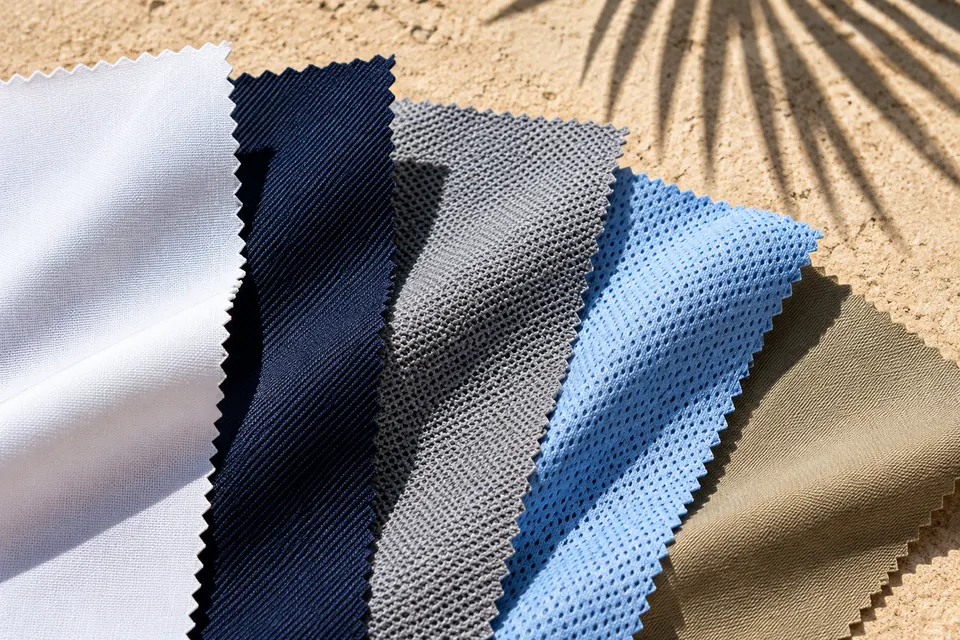
The way a fabric is constructed changes how air moves through it. Open knits such as pique, common for polo shirts, breathe better than dense, tightly woven cloth. Twill weaves are hard-wearing and suit trousers and workwear. When you compare samples, hold the fabric up to the light: more open structures generally let more air through.
Colour
Lighter colours reflect more sunlight and feel cooler outdoors, while darker colours hide marks better in kitchens, housekeeping and industrial work. Strong sun can also fade colours over time, so outdoor uniforms benefit from colour-fast fabrics and shades that age gracefully.
Matching fabric to the role
- Office and front desk: smooth poly-cotton or cotton-rich shirting that resists creasing and looks crisp all day
- Hotels and hospitality: colour-fast, easy-care blends for staff on their feet, with lighter, breathable fabrics for pool, beach and recreation teams. See our hotel and hospitality uniforms for department-by-department options
- Kitchens: breathable cotton or poly-cotton chef coats, sometimes with ventilated panels, in whites that tolerate hot washing
- Healthcare: breathable poly-cotton or stretch blends for scrubs that dry quickly and keep their colour; see our medical scrubs
- Outdoor and site work: lightweight cotton or poly-cotton work shirts, moisture-wicking polos and hi-vis in fabrics suited to long hours in the sun. Our industrial workwear range covers coveralls, work shirts and hi-vis
- Schools: breathable, easy-care shirts and hard-wearing blends for trousers, skirts and pinafores; moisture-wicking fabrics for PE kits
Plan for laundering, not just for wearing
In the UAE, uniforms are often washed after every shift, sometimes by commercial laundries at high temperatures with strong detergents. That changes the decision. A fabric that feels wonderful on day one but shrinks, pills or fades after a month of hot washing is the wrong fabric.
When you compare samples, ask:
- How will this fabric look after frequent washing at the temperatures our team or laundry uses?
- Is it colour-fast, and will dark or bright colours bleed onto other items?
- Does it need ironing, or will it come out of the dryer presentable?
- Will embroidery and printing hold up on this fabric through the same washing?
If you send uniforms to a commercial laundry, share the laundry's process with your supplier at the start. It helps them recommend fabrics and finishes that will last.
Special finishes worth knowing about
Some fabrics can be supplied with finishes that add a specific function, for example stain-resistant finishes for front-of-house and children's wear, or antibacterial and fluid-repellent finishes for healthcare. Flame-retardant fabrics are used where a site's risk assessment requires them. Always tell your supplier the standard or requirement you need to meet, and ask them to confirm in writing which fabric meets it before you order.
Test before you commit
The most reliable way to choose is to wear the fabric. Ask for sample garments and have a few staff wear them through real shifts, including the hottest part of the day if they work outdoors. Wash them several times the way your team will. Then decide. A short trial like this catches problems that a swatch on a desk never will.
Quick answers
What is the coolest fabric for a work uniform in the UAE?
For active or outdoor work, a moisture-wicking polyester knit usually feels coolest because it moves sweat away and dries fast. For indoor roles, lightweight cotton or a cotton-rich poly-cotton is comfortable and breathable.
Is cotton or polyester better for uniforms?
Each has strengths. Cotton is softer and breathes well but dries slowly and can shrink or fade. Polyester is durable, quick-drying and colour-fast. A poly-cotton blend gives a balance of both and suits most everyday uniforms.
Why do many uniforms use poly-cotton?
Because uniforms are worn all day and washed constantly. Poly-cotton stays comfortable while resisting shrinking, creasing and fading better than pure cotton.
Do lighter colours really keep staff cooler?
Lighter colours reflect more sunlight, so they generally feel cooler outdoors. Indoors, the difference is small, and darker colours may be better for hiding marks.
Want to feel the difference before you decide? Visit our Ras Al Khaimah showroom to compare fabric swatches and sample garments side by side, or send us your roles and working conditions and we will recommend fabrics with a quotation.